26 May: Website CHECKOUT is temporarily closed so I can have a break. You can browse and plan for future crystals purchases once it re-opens.
24 July: Re-opens so you can place orders in advance.
4 August: Orders start shipping.

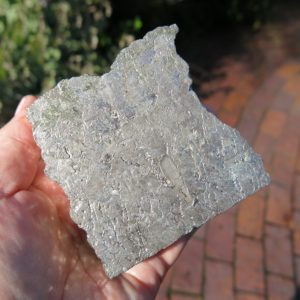
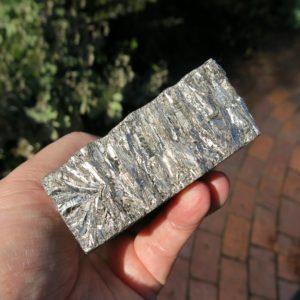
Bismuth Crystal Slab

$140.00

Do you want to try growing your own bismuth crystals? Not an activity for kids but men like trying it. Bismuth can be used to support transformation by aiding travel between the physical plane and realms of astral and spirit.

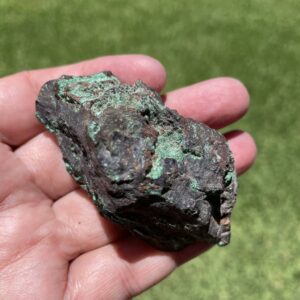
This raw bismuth would be great for a geologist.

  • This is my last piece.
  • Read more on tabs and watch video.

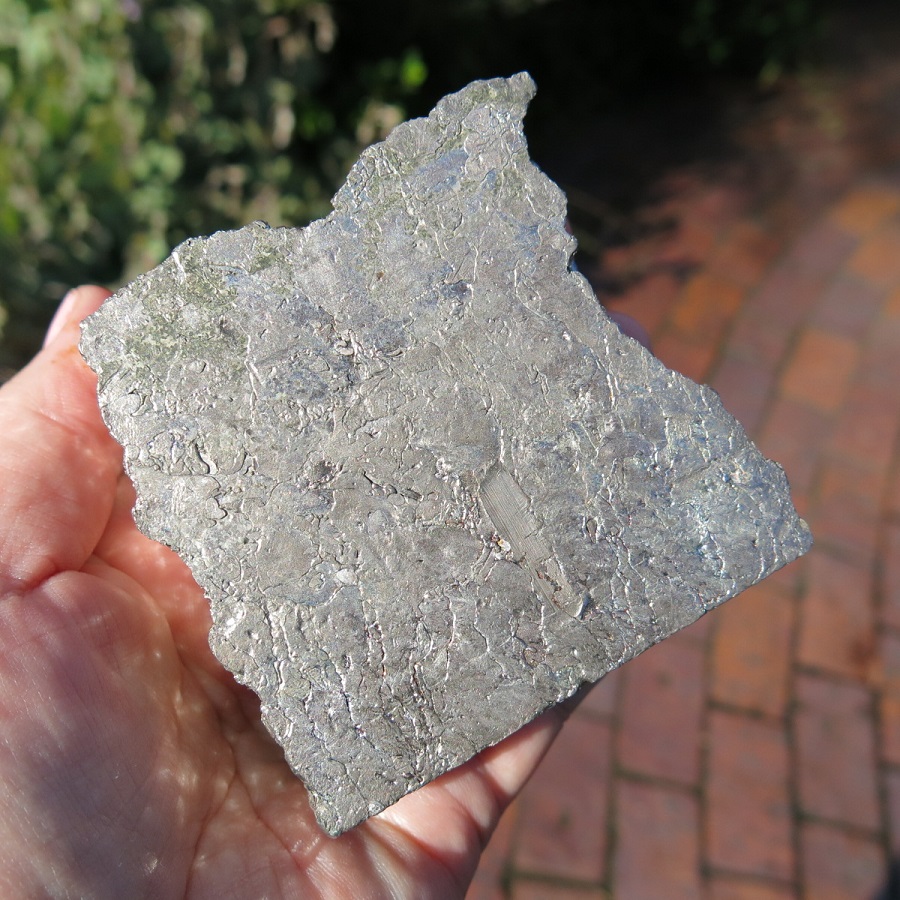
We bought a few raw bismuth crystal ore slabs for people who want to try out making their own bismuth crystals or for a geologist wanting just refined bismuth.

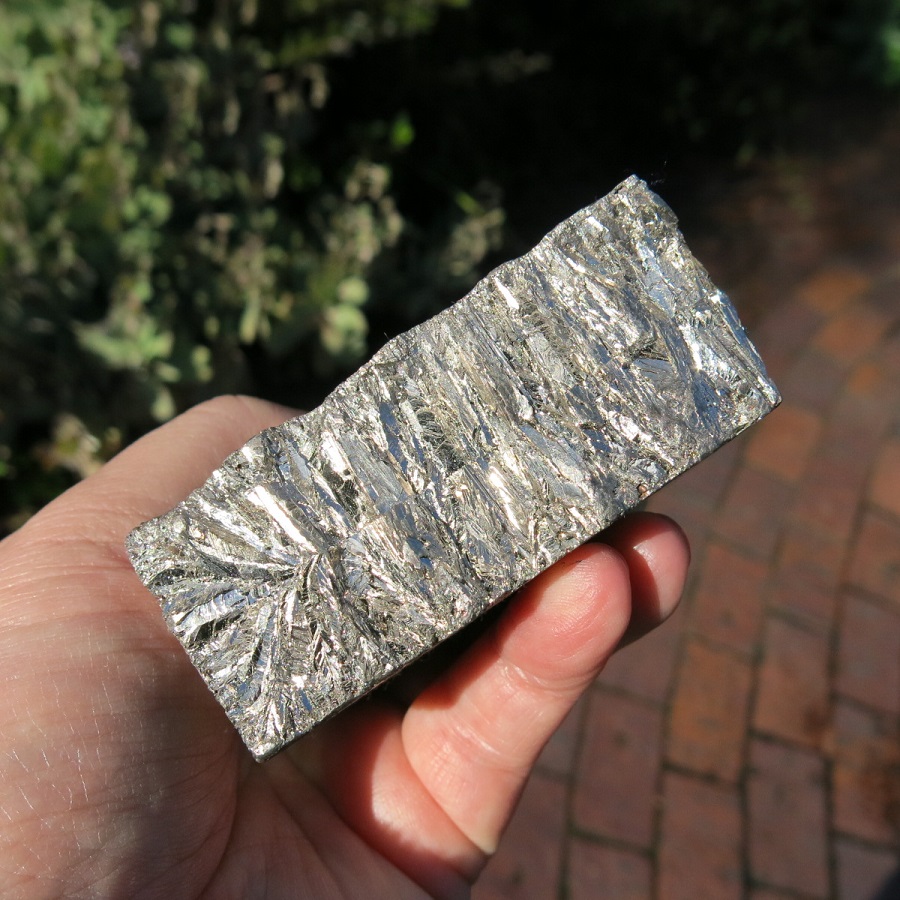
  • The side show lovely crystal structure.
  • It is very heavy yet the metal is brittle.
Meaning Of Bismuth Crystal

Bismuth can help you to achieve your goals, especially when working as part of a team. It can also help with visualisation while shamanic journeying.

Bismuth is often associated with transformation through change, reflecting its journey from raw ore to processed metal to structured crystal. Its step-like growth pattern symbolises progress made one layer at a time, making it a supportive crystal during periods of transition, reinvention, or personal restructuring.

Read more on Healing Tab.

Goodness knows how powerful a big piece like this could be! One psychic reader bought another of our raw bismuth for sale at our crystal shop. She was strongly drawn to it for her spiritual life purpose.

The previous two slabs I sold to people who were melting it. One to grow crystals and the other to create a knife for their father who is a geologist. This piece is so interesting with the finger and the stamp, I hope if you buy it that you might leave as is!

And if you buy this raw bismuth crystal ore slab because you know how to grow bismuth crystals, I will love to see the photos!

Weight 1264 g
Dimensions 85 × 62 × 30 mm

Healing Properties

Benefits of Bismuth
De-Isolates, Stability, Transformation
  • Relieves emotional and spiritual isolation.
  • Helps the institutionalised ease back into the community.
  • Provide stability in times of change so people stay calm and organised.
  • Covers and protects us,
    • as well as healing rifts in the planet from man's activities.
  • Great for those who lead groups
    • e.g at work or social events
    • especially to help others overcome "it can't be done" or "no chance".
  • Helps you transform your life.
  • Said to:
    • ease fevers and help benefit from new treatment,
    • assist muscle degenerative illnesses like ME;
    • help faster recovery from surgery and relieve exhaustion.

Geological Information

Geological Information for Metal
  • This section covers: Copper, Gold, Silver, Manganese, Galena
  • Other sections cover: Bismuth, Pyrite. Magnetite is with Hematite
  • Metals can be pure or elemental - appearing on the periodic table - such as Bismuth, Manganese, Copper. Others are oxides or metals compounds - such as Pyrite, Hematite, Chalcopyrite. And lastly they can be combined into alloys like steel, pewter, brass or bronze.
  • "A metal (from Greek μέταλλον métallon, "mine, quarry, metal"[1][2]) is a material (an element, compound, or alloy) that is typically hard when in solid state, opaque, shiny, and has good electrical and thermal conductivity. Metals are generally malleable—that is, they can be hammered or pressed permanently out of shape without breaking or cracking—as well as fusible (able to be fused or melted) and ductile (able to be drawn out into a thin wire).[3] Around 90 of the 118 elements in the periodic table are metals" - read more from Wikipedia.
General Identification
  • Type: Element
  • Class: Metal
Copper (Cu - atomic weight 29)
  • Appearance: red-orange metallic luster
  • Crystal System: Cubic
  • Mohr Hardness: 3
  • Discovery Middle East 9000BCE
  • Copper is one of the few metals that can occur in nature in a directly usable metallic form.
  • "Copper is used as a conductor of heat and electricity, as a building material, and as a constituent of various metal alloys, such as sterling silver used in jewellery, cupronickel used to make marine hardware and coins, and constantan used in strain gauges and thermocouples for temperature measurement. " Wikipedia
  • More geological information.
Galena (Au - atomic weight 79)
  • Appearance: metallic grey
  • Crystal System: Cubes and octahedra, blocky, tabular and sometimes skeletal crystals
  • Mohs Hardness: 2.5–2.75
  • Other characteristics: Natural semiconductor
  • Also called lead glance, is the natural mineral form of lead(II) sulfide (PbS).
  • Most important ore of lead and an important source of silver.
  • Often associated with the minerals sphaleritecalcite and fluorite.
  • One of the oldest uses was in the eye cosmetic kohl. In Ancient Egypt: applied around the eyes to reduce the glare of the desert sun and to repel flies (a potential source of disease).
Gold (Au - atomic weight 79)
  • Appearance: metallic yellow
  • Crystal System: Cubic
  • Mohs Hardness: 2.5
  • Discovery Middle East before 6000BCE
  • "Gold often occurs in free elemental (native) form, as nuggets or grains, in rocks, in veins, and in alluvial deposits...Gold is the most malleable of all metals; a single gram can be beaten into a sheet of 1 square meter... Gold leaf can be beaten thin enough to become semi-transparent....Gold is resistant to most acids,...gold is a precious metal that has been used for coinage, jewelry, and other arts...world consumption of new gold produced is about 50% in jewelry, 40% in investments, and 10% in industry." wikipedia
  • The world's oceans contain gold but the amounts to rare to extract.
  • More geological information.
Manganese (Mn - atomic 25)
  • Appearance: silvery metallic
  • Crystal System: Cubic
  • Mohr Hardness: 6
  • Dsicovery in 1774 as noted in many iron ores.
  • It is not found as a free element in nature yet Manganese comprises about 1000 ppm (0.1%) of the Earth's crust, the 12th most abundant of the crust's elements.it is often found in minerals in combination with iron. Manganese is a metal with important industrial metal alloy uses, particularly in stainless steels.
  • With chlorine it forms pyrolusite.
  • "Manganese phosphating is used for rust and corrosion prevention on steel. Ionized manganese is used industrially as pigments of various colors" wikipedia
  • More geological information.
Silver (Ag - atomic weight 47)
  • Appearance: lustrous white metal
  • Crystal System: Cubic
  • Mohs Hardness: 2.5
  • Discovery before 5000BCE
  • "Silver has long been valued as a precious metal. Silver metal is used in many bullion coins, sometimes alongside gold] while it is more abundant than gold, it is much less abundant as a native metal ... silver is used in solar panels, water filtration, jewellery, ornaments, high-value tableware and utensils (hence the term silverware), in electrical contacts and conductors, in specialized mirrors, window coatings, in catalysis of chemical reactions, as a colorant in stained glass and in specialised confectionery. Its compounds are used in photographic and X-ray film. Dilute solutions of silver nitrate and other silver compounds are used as disinfectants and microbiocides, added to bandages and wound-dressings, and medical instruments " wikipedia
  • More geological information.
Special Notes
  • "Many elements and compounds that are not normally classified as metals become metallic under high pressures. For example, the non-metal iodine gradually becomes a metal at a pressure of between 40 and 170 thousand times atmospheric pressure. Equally, some materials regarded as metals can become non-metals. Sodium, for example, becomes a non-metal at pressure of just under two million times atmospheric pressure. " Wikipedia
  • In Wikipedia read: Toxic effects of metals